Introduction
How revolutionized by responsive web design building up websites? Being ready to vary appropriately layout and content to various screen sizes and devices, such feature comfortably grants improved usability in an increasingly mobile world. Current browsers and devices easily, without a hitch, put to work all fluid functionalities of css media queries, flexbox layouts, scaleable images, and dynamic content blocks so that when accessing websites, this must not matter as far as the viewport is concerned. Many current mobile devices, tablets, and desktops do boast responsive features; however, they not even close to being the same story when older devices come to play. Such legacy systems usually fail to comprehend modern CSS and JavaScript measures, thus causing poor usability and major impairments in overall site accessibility.
These limitations of responsive design on older devices are discussed in this article. Outdated hardware, obsolete browsers, unsupported CSS properties, even not-mainstream screen resolutions-all these things put hurdles on web developers. In some sectors like education, low-income areas, or government, older technology is still being employed. If you neglect those users, you just might alienate a portion of your target audience. It is crucial to understand these constraints and try to accommodate them without degrading performance on modern devices to make websites universally accessible.
Understanding Rendering Limitations on Outdated Browsers
Lack of Support for Modern CSS Properties
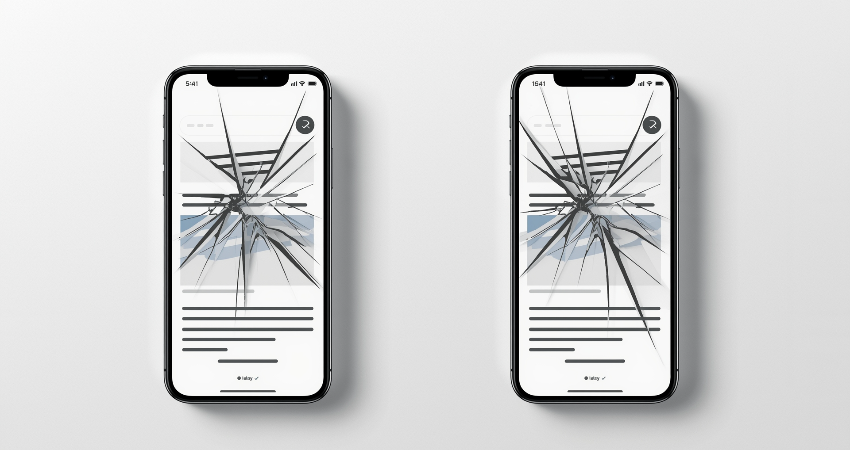
Old devices actually have some problems, and one of them is their lack of support for the more modern CSS properties which make responsive design possible. Flexbox, grid and a few other uses of media queries are almost fully supported in the older browsers such as Internet Explorer 8 or any outdated versions of Android Browser. This forms circumstances in which layouts that are perfect for new devices totally break on the older systems. A flexbox container might fail at wrapping, for example, or even media queries might fail to trigger, leaving the user with a zoomed-out or broken interface.
Such limitations constrain a site to be responsive because the greatest dependence is placed on CSS to manipulate layouts. A site is built with the assumption that certain features will always be available, and users with older devices may find content that overlaps, goes off-screen, or is just plain unreadable. Polyfills and graceful degradation can help to solve some of these issues, but might also add weight and complexity to the codebase. Therefore, the trade-off of offering modern responsiveness versus backward compatibility must be weighed, which could also mean supplying alternate CSS rules for any older platform via conditional comments or CSS fallbacks.
Ineffective Media Query Interpretation
Not just be able to adjust and even do all sorts of tweaks to a webpage by the use of media queries are the most relevant and useful tool in responsive web design. These media queries provide a way for the developer to modify the styles accordingly in accordance with the device width and orientation or the resolution of the device. But unfortunately, most of the older browsers disable or ignore most of these queries. Such as, if a site were to apply the media query @media screen and (max-width: 768px), which would be optimized for tablets, a person trying to read it using an advanced iPad would have no problems, but the same tablet model from an earlier version that uses an outdated browser engine would make the user experience incremental or very few users would read it and even fewer would find some parts misaligned. Such a given scenario is a potential cause of the poor readability it can realize through excessive horizontal scrolling and missing navigation elements, which greatly affect usability.
Even with media queries being partially understood by older browsers, compound conditions and non-standard screen densities are generally beyond the capabilities of these browsers. Therefore, the goal of providing a smooth experience across all devices becomes really very complicated. The difficulty in giving perspective on this even escalates when targeting low-resolution displays where fonts or images do not render crisply due to hardware and software constraints. To combat these issues, developers might consider creating responsive breakpoints over a wider range or even using server-side detection to present simplified CSS stylesheets for legacy systems.
Performance Struggles on Low-Spec Hardware

Slow Processing of Responsive JavaScript Components
Several modern responsive designs depend not just on CSS but also JavaScript for functionalities such as collapsible menus, lazy loading, or dynamically resizing image galleries. While these enhancements work fine on most of the newer devices, they can act as the greatest impediment to the browsing experience on older hardware. Most legacy phones and laptops run on underpowered processors with limited RAM and, therefore, lack the muscle to run modern-day heavy-duty JavaScript frameworks, for instance, React, or even handling a large jQuery script. Such frameworks ultimately make the performance of the old system lag—animations stutter, delays are introduced to click events, and the overall interaction feels irritating.
These devices can add all kinds of bloat onto their operating systems and fill them with background apps, leaving little resource for browser rendering. Therefore, on these occasions, what should have been a plus is in fact a minus. Thus, developers must start consciously minimizing their use of JavaScript for anything important. Progressive enhancement is really all about making sure that, without JavaScript, the most basic functions work, while enhancements that aid the user experience would be layered in only if they did not degrade the baseline performance on older hardware.”
Heavy Asset Loads and Slow Bandwidth Compatibility
Upon visiting the markup document, such customizing is mocked with alarming accuracy, thereby providing HTML and increasing the ease with which the same document can be manipulated. Websites that are responsive, rich in content such as large hero images, autoplaying videos, and high-resolution icons, and burdened with third-party scripts (tracking pixels, social feeds, and whatnot) take an eternity to load on systems that are otherwise broadband-supported and running modern CPUs. These websites gobble up all CPU resources and bandwidth in an instant on the older machines, rendering even simple sites almost unusable.
Image optimization, caching, and server-side content negotiation are essential in this case. The use of srcset and picture elements is helpful, but again those features may be poorly supported by old browser software. Developers might consider delivering down-level assets to devices identified as obsolete, perhaps even skipping certain visual improvements altogether. Performance budgets and load time targets must be relaxed to allow essential content to reach users quickly on bad connections and old chips. Using lightweight CSS frameworks and simple themes can facilitate the making of responsive web technology that even stands usable on bad days.
Design and Layout Inconsistencies
Unpredictable Font Rendering and Scaling Issues
The art of typography has a great bearing on user experience, especially on content-heavy websites. While modern trends favor scalable vector fonts (such as Google Fonts), older devices often display these inconsistently or do not display them at all. For example, text may overflow containers, line heights may be miscalibrated, and letter spacing may be awkward. Zoom features on smaller screens are crucial from an accessibility standpoint, but if not used properly, they can break responsive layouts.
In such a space, custom fonts can become liabilities rather than assets. A fallback to system fonts such as Arial, Georgia, and Verdana may enhance readability on older systems. Relative units (em or rem) should be used in place of fixed pixel sizes as far as possible to reduce distortion while zooming. Screen scaling for layouts must also be tested on smaller, low-resolution screens to still ensure reading pleasure and general charm. In the design of responsive layouts across a hardware continuum, we value flexibility much more than pixel-perfect results.
Broken Navigation and Touch Responsiveness
A common problem regarding the responsive websites on older devices is unresponsive navigation. Hamburger menus, dropdowns, sticky headers, and fixed-position elements are controlled by JavaScript, CSS transitions, or both. Because of the absence or improper functioning of JavaScript or CSS transitions or both in older browsers, there are broken menus or some other navigational elements become unresponsive to user interaction. That, unfortunately, may lead to inconsistent touch. Old capacitive or resistive screens might really do not respond well to swiping movements or very precise tapping, making touch engagement even more difficult when attempting to reach very small or otherwise interactive elements.
As a way to address this, developers should incorporate into their work navigational structures that are inherently accessible and quite simple to use, especially for keyboard or non-touch interaction. Never use fancy JavaScript for menu control alone and always provide a fallback method such as visible links or no-script versions of navigation. Navigation elements should be large enough to accommodate low-precision input and should be clearly distinguishable in the visual hierarchy. To this end, building to accessibility best practices not only benefits older platforms but also enhances the experience for users with disabilities, which is, of course, becoming more and more of an important consideration in new digital products.
Workarounds and Practical Solutions

Graceful Degradation vs. Progressive Enhancement
To accommodate older devices while still incorporating advanced features, developers must make careful choices concerning two major strategies: graceful degradation and progressive enhancement. Graceful degradation begins with a standard-compliant site and steps through gracefully losing features with time for the older browsers. On the contrary, progressive enhancement defines an experience through its basic features and then adds advanced features for browsers that can support them. Generally, for responsive designs, progressive enhancement is the safer approach, particularly toward maintaining older devices.
To cite an instance, one could design a fast loading layout with simple float or flexbox CSS constituting core functionality and then attach enhancements with CSS Grid or animation for a good experience for modern users. Business logic from JavaScript functions ought to be added in as unobtrusively as possible to keep core functionality intact for environments where scripting fails. This approach widens the most general compatibility without putting strain on development time and complexity. External testing using BrowserStack or legacy emulator will help certify that your baseline experience is usable.
Use of Feature Detection and Conditional Assets
Another powerful way to mitigate responsiveness on older hardware is by using tools for detecting features such as Modernizr. They enable developers to determine whether a user’s browser supports specific HTML5 or CSS3 features and then conditionally apply or omit assets accordingly. This is especially useful for the less beneficial resource-wise large fonts, responsive images, or layout modules. targeting features that only the user’s browser can deal with would avoid any unnecessary load, improving overall performance.
Also, though they themselves are somewhat antiquated now, conditional comments can still provide a useful mechanism for older Internet Explorer versions: alternative stylesheets can be delivered while some of the complex CSS may be ignored in favor of a working layout. With that in mind, you could think about providing different HTML templates through server-side rendering (SSR) depending on the user agent. It certainly expands the project scope, but at least it doesn’t let you sidestep your users just because of how old their devices are. With the right detection mechanism and subsequent optimization, responsive designs can yet be conquered within the constraints of an aging platform.
Conclusion
Responsive design is a very important advancement in web development. It allows flexibility to some extent, provides a better user experience, and is becoming increasingly important given the number of device types and sizes of the display screens. On the other hand, it has certain restrictions when considering older devices that a developer has to keep in mind. Outdated browsers, slow hardware, interpolation issues due to inconsistent rendering engines, and surmounting performance bottlenecks all work against how a site is displayed and interacted with. In fact, assuming that responsiveness holds good for all would result only in disappointing user experiences of people hanging onto legacy systems.
In getting past these challenges, developers need to plan—designing for progressive enhancement, using fallback-friendly CSS, limiting assets that consume resources, and implementing feature detection. Yet while the goal of supporting every godforsaken piece of hardware must be abandoned, the wider accessibility appeal is an area worth fighting for, in a very user-centric manner. In many situations, serving a good experience to users on old systems still feels right with a plain and simple responsive layout. Balancing modernity with clever fallback strategies ensures that a site is inclusive, effective, and ready for every visitor-regardless of how old their device may be.